Discovering diagonal cracks in your brickwork, sticking interior doors, or sloping floors in your home can be deeply alarming. In Northwest Ohio and Southeast Michigan, structural foundation settlement is a widespread issue that requires permanent structural intervention rather than surface-level cosmetic patching. When a foundation sinks, heavy-duty steel piering systems—specifically push piers and helical piers—are the gold standard used by civil engineering-backed specialists to stabilize and lift footings back to safety.
This guide breaks down why local foundations sink, compares push piers against helical piers, and explains how certified technicians determine the ideal structural repair method for your home.
Why Do Foundations Sink in Northwest Ohio & Southeast Michigan?
Foundation settlement in Lucas, Wood, and Monroe Counties is primarily driven by regional soil composition and drastic seasonal weather shifts.

1. Heavy Clay Soil Expansion & Contraction
The ground across Toledo and surrounding areas contains dense glaciomarine clay soil. During wet spring thaws and heavy rainstorms, clay absorbs vast amounts of water and expands. Conversely, during hot, dry summer spells, the soil shrinks and pulls away from concrete footings. This relentless expansion-contraction cycle leaves void spaces under your foundation, causing heavy structural concrete to drop.
2. Uncompacted Builder Fill & Soil Consolidation
During original home construction, soil excavated for basement footings is backfilled around the foundation perimeter. If this backfill earth was not thoroughly compacted, natural soil consolidation occurs over time under the massive weight of the framing, brickwork, and roof structures.
Early Warning Signs Your Home Needs Structural Piering
Catching structural movement early prevents progressive structural failure across upper floors. Key warning signs include:
- Exterior Brick Fractures: Stair-step cracks running along mortar lines, particularly near building corners.
- Interior Door & Window Jamming: Frames twisting out of square, causing doors to stick or pop open unexpectedly.
- Floor Sloping & Separation: Gaps forming between baseboards and hardwood floors or visible floor pitching.
- Foundation Wall Shearing: Concrete block walls sliding inward or shifting away from floor footings.
Push Piers vs. Helical Piers: What’s the Difference?
Both systems transfer your home’s structural load off unstable topsoil down to load-bearing bedrock or dense soil strata. However, the installation mechanics and ideal application environments differ significantly.
Push Piers (Resistance Piers)
How They Work: Push piers consist of high-strength tubular steel sections. Using heavy-duty hydraulic rams, the piers are driven vertically through structural brackets attached directly to your home’s footings, utilizing the actual weight of the house as driving resistance.
- Best For: Heavy residential structures, multi-story brick or masonry homes, and deep bedrock profiles.
- Key Advantage: Extremely high load capacity with the ability to penetrate deep, dense soil strata until reaching solid bedrock.
Helical Piers (Screw Anchors)
How They Work: Helical piers feature heavy-duty steel shafts with welded screw-like plates (helices). Instead of relying on house weight for driving pressure, they are mechanically rotated into the ground using hydraulic torque drivers until precise torque and depth ratios are achieved.
- Best For: Lighter structures (porches, room additions, single-story framing) or locations where topsoil provides insufficient resistance.
- Key Advantage: Excellent for both tension (uplift) and compression loads, with minimal vibration during installation near delicate surrounding structures.
The Structural Piering Installation Process
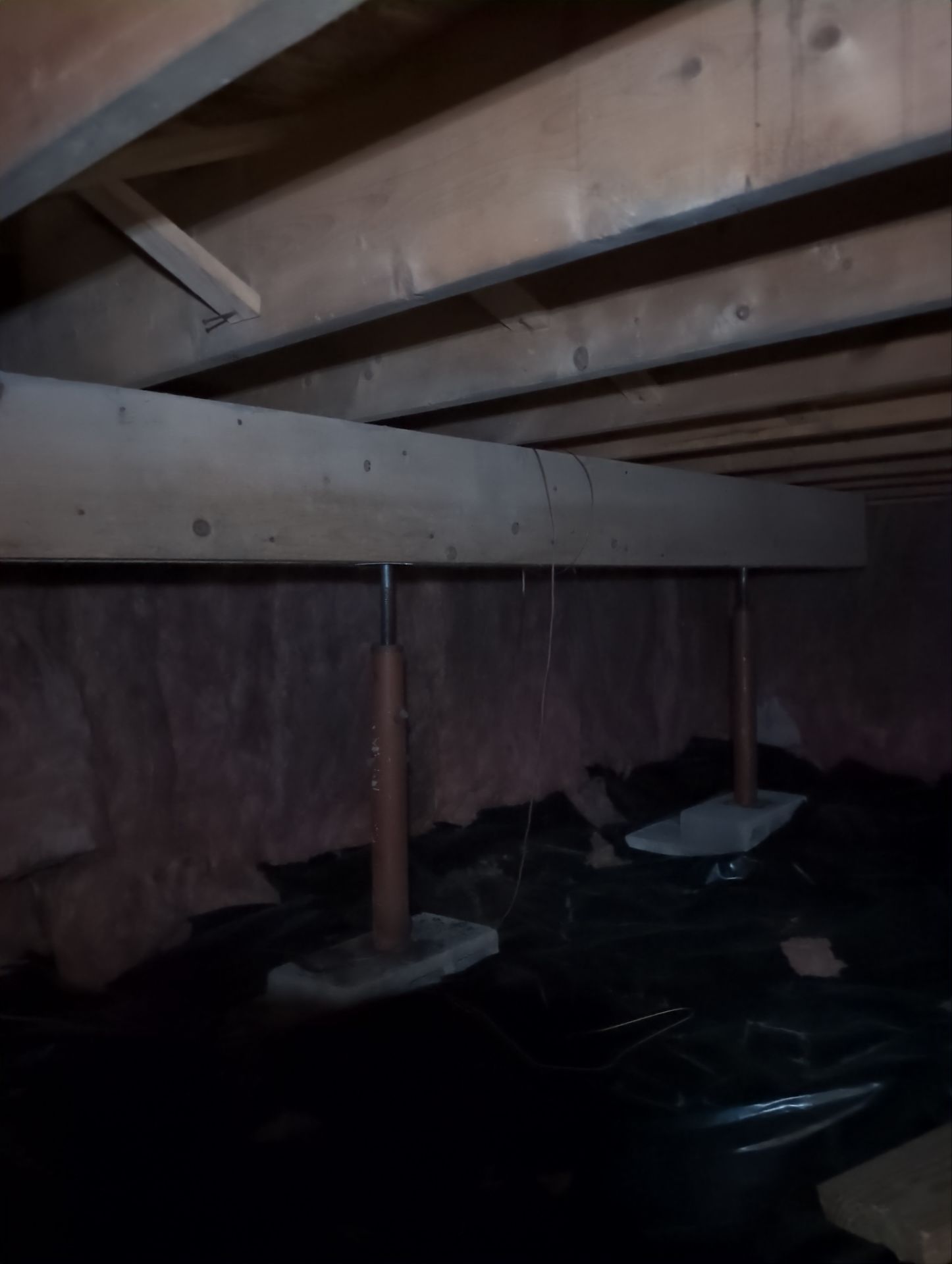
- Excavation & Footing Prep: Uncovering the concrete footing at calculated load-bearing intervals.
- Bracket Attachment: Securing high-strength steel foundation brackets directly under structural footings.
- Driving Piers: Hydraulically driving push piers to bedrock or torque-screwing helical piers to precise engineering specifications.
- Hydraulic Lifting & Stabilization: Transferring home weight onto the steel piering network and carefully lifting footings back toward level position where feasible.
- Backfill & Restoration: Locking pier brackets permanently into place, backfilling excavation sites, and restoring landscaping.
Frequently Asked Questions
How much does foundation piering cost in Toledo, OH?
Costs depend on the total number of piers required, pier depth necessary to reach solid load-bearing strata, and site accessibility because piering is a custom structural solution, an on-site inspection is required to calculate exact structural loads before providing a fixed estimate.
Can foundation piering lift my home back to its original position?
In many cases, hydraulic lifting systems can restore settled footings close to their original level position. However, structural engineers prioritize safety and frame integrity to prevent secondary drywall or plumbing damage during lifting.
Is foundation piering a permanent fix?
Yes. Steel push and helical pier systems bypass unstable, expanding topsoil to anchor your home permanently into competent bedrock or load-bearing soil strata, backed by long-term transferable warranties.
Don’t Let Structural Settlement Destroy Your Property Value!
If you suspect your foundation is sinking or shifting, contact the civil engineer-led experts at Toledo Basement Repair today at (419) 297-6138 or fill out our online contact form to schedule your free, no-obligation structural inspection.

Kevin Oberhouse was raised in Toledo with 7 siblings. Dawn and Kevin have four kids.
The Oberhouse family lives in the house Kevin built when with his first crew. Kevin’s parents invited more than 100 foster children into their home throughout his life. Kevin believes this part of his life really helped to build empathy for others.
Kevin has a degree in civil engineering and went on to get an MBA as well as multiple other certifications in structural systems, egress systems, air quality, and commercial and residential roofing, among many others.
Toledo Basement Repairs promises to treat you and your project with respect and our best professional judgment. There is plenty of work out there and Toledo Basement Repair will not push you into a system that you do not fully understand or feel comfortable with.