
For many homeowners, the crawl space is out of sight and out of mind. However, building science reveals that up to 50% of the air in your home’s main floor originates directly from this dark, subterranean zone. If your crawl space is vented and unconditioned, it continuously pulls in outdoor humidity, fostering mold germination, musty odors, and structural wood rot.
Modern crawl space encapsulation breaks this destructive cycle. By sealing the earth floors, insulating the foundation walls, and installing a commercial-grade dehumidifier, you convert a damp liability into a clean, dry, conditioned part of your home’s envelope. If you are ready to protect your structural framing and improve your indoor air quality, this comprehensive guide outlines real-world encapsulation costs, component pricing, and long-term value drivers for 2026.

Average Cost of Crawl Space Encapsulation
The total investment for a professional crawl space encapsulation project typically ranges from $5,500 to $15,000. For a standard residential footprint between 1,200 and 2,000 square feet with minor cleanup requirements, homeowners generally see an average cost of roughly $8,500.
Because every home handles groundwater and structural layout differently, final estimates are customized based on square footage, current structural condition, and necessary air-management machinery. The baseline project tiers break down as follows:
| Project Tier | Estimated Cost Range | What Is Typically Included |
|---|---|---|
| Basic Encapsulation | $4,000 – $6,500 | Debris removal, minor floor leveling, standard 12-mil vapor barrier liner, and taped seam seals. |
| Full Environmental Transformation | $7,000 – $13,500 | Deep cleanout, structural mold treatment, heavy-duty 20-mil antimicrobial liner, foundation wall insulation, and a self-draining dehumidifier. |
| Advanced Waterproofing & Reconstruction | $14,000 – $22,000+ | All standard encapsulation features plus interior perimeter drainage tile installation, cast-iron sump pump setup, and structural floor joist repair/reinforcement. |
Primary Cost Drivers: Breaking Down the Components
To understand where your investment goes, it helps to isolate the individual components that certified local encapsulation companies utilize to build a high-performance moisture defense system.
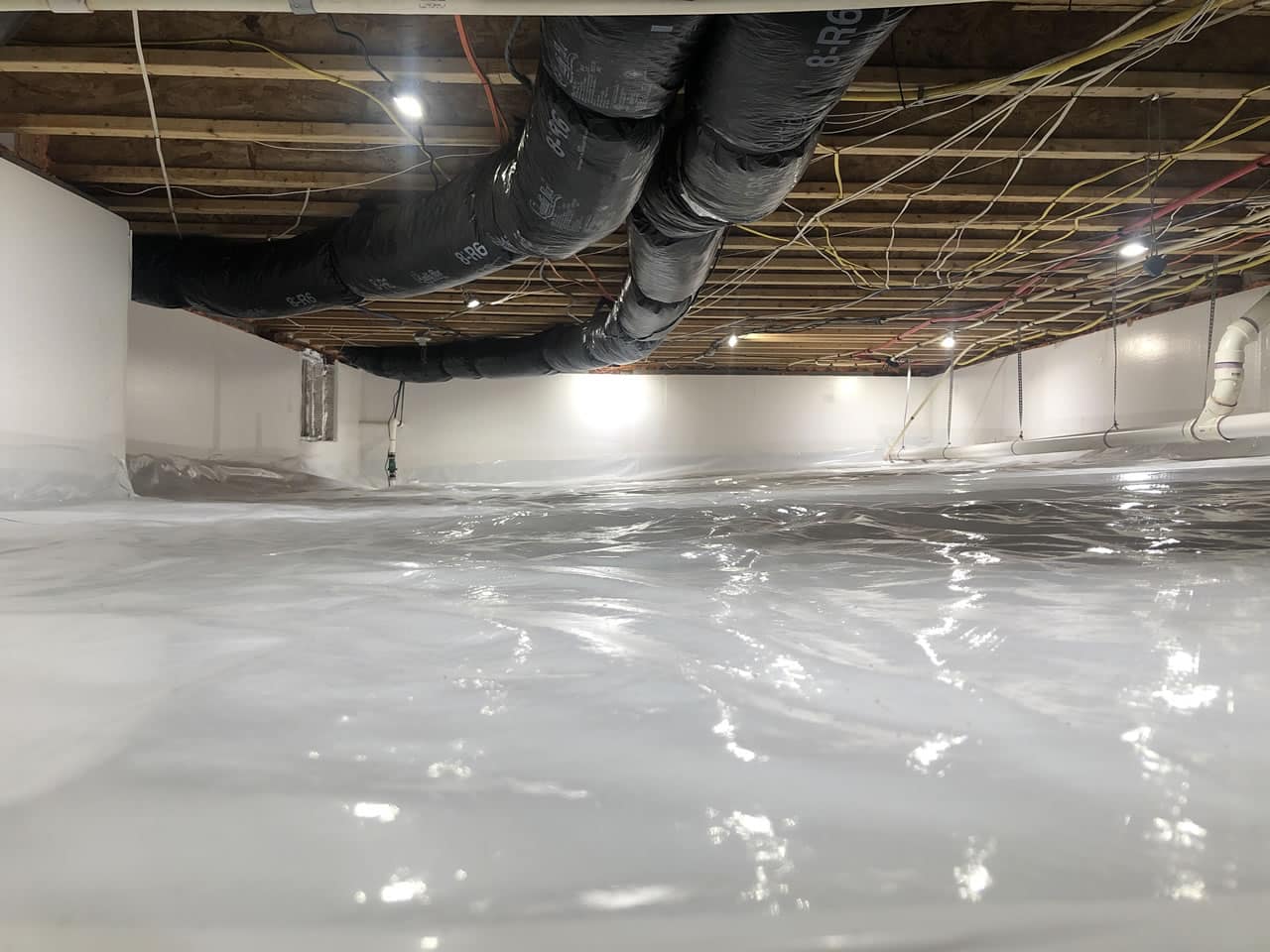
1. Vapor Barrier Liner Thickness and Quality ($0.75 – $2.50 per sq. ft.)
The core material of any encapsulation project is the polyethylene plastic liner. Thin, 6-mil or 10-mil builders’ grade plastic tears easily and offers minimal protection. High-performance projects deploy multi-ply, puncture-resistant 20-mil virgin resin liners embedded with antimicrobial additives. This premium thickness ensures the barrier survives years of foot traffic from service technicians without ripping, keeping ground vapor locked out permanently.
2. Foundation Wall Insulation ($2.00 – $4.50 per sq. ft.)
To maximize energy efficiency, foundation walls must be insulated after the vapor barrier is pinned into place. Contractors typically utilize rigid foam boards or specialized closed-cell spray foam. This isolates your crawl space from extreme winter freezes and baking summer heat, keeping your first-floor flooring comfortable year-round.
3. Dedicated Air Dehumidification Systems ($1,400 – $2,300)
Simply sealing a crawl space isn’t enough; you must actively manage the relative humidity. Standard residential dehumidifiers cannot handle the harsh conditions of a subterranean environment. Professional-grade, low-clearance crawl space dehumidifiers are installed to automatically monitor the air, keeping relative humidity strictly below 50% to completely arrest mold development.
4. Sump Pump and Perimeter Drainage Integration ($2,500 – $5,500)
If your crawl space regularly experiences standing water or tracking mud during seasonal heavy rains, a water management system must be integrated before laying down the liner. Crews excavate an interior trench around the perimeter, lay down perforated drainage tile, and route the water into a cast-iron sump pump pit to eject groundwater far away from the foundation.
Frequently Asked Questions
Q: Does crawl space encapsulation genuinely lower monthly heating and cooling utility costs?
A: Yes. By sealing out extreme ambient temperatures and eliminating the high humidity that forces your HVAC system to work overtime, homeowners typically notice a 10% to 15% reduction in monthly heating and cooling energy usage.
Q: Can I encapsulate my crawl space myself using retail plastic rolls?
A: While DIY kits exist, a flawless seal is difficult to execute. Improper wrapping around support piers, failing to mechanically fasten liner terminations, and omitting active drainage or dehumidification can trap tracking groundwater behind the plastic, accelerating hidden structural wood rot.
Q: How long does a professional crawl space encapsulation system last?
A: When high-quality, 20-mil antimicrobial liners are installed by a certified team, the physical barrier can easily last upwards of 20 to 25 years. The mechanical components, such as the commercial dehumidifier and sump pump, generally carry lifespans of 5 to 10 years and require basic annual maintenance checks.
Crawl space encapsulation is a foundational investment that goes far beyond aesthetic improvement. By sealing out environmental dampness, you actively preserve your floor framing from costly sag, eliminate musty household odors, and build a verified health barrier that safeguards your entire family from airborne allergens.

Kevin Oberhouse was raised in Toledo with 7 siblings. Dawn and Kevin have four kids.
The Oberhouse family lives in the house Kevin built when with his first crew. Kevin’s parents invited more than 100 foster children into their home throughout his life. Kevin believes this part of his life really helped to build empathy for others.
Kevin has a degree in civil engineering and went on to get an MBA as well as multiple other certifications in structural systems, egress systems, air quality, and commercial and residential roofing, among many others.
Toledo Basement Repairs promises to treat you and your project with respect and our best professional judgment. There is plenty of work out there and Toledo Basement Repair will not push you into a system that you do not fully understand or feel comfortable with.
