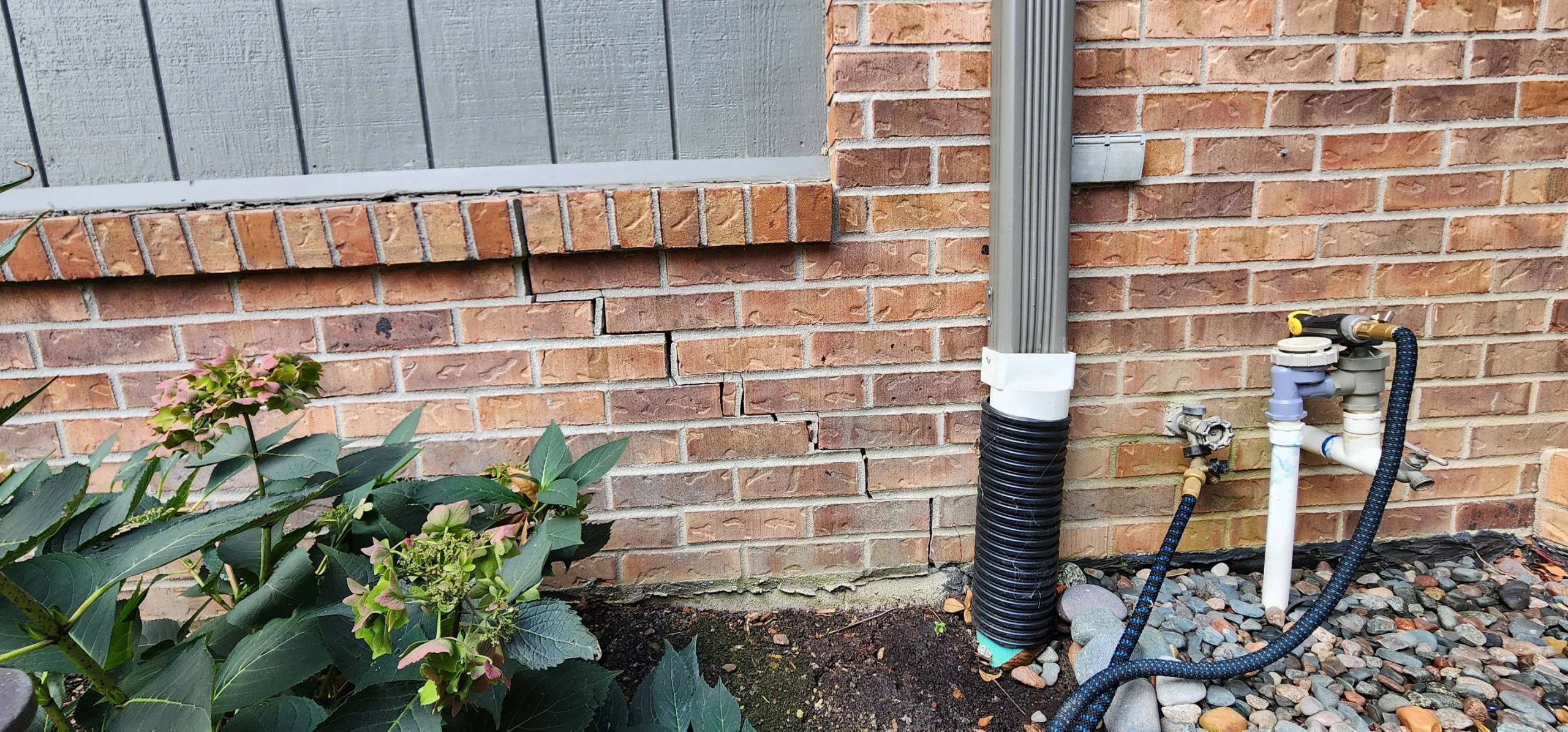
Sticking doors, stair-step cracks in brick, gaps around windows, or floors that slope toward one side of your home can be signs of more than normal aging. In some Toledo-area homes, these changes may indicate foundation settlement, where part of the foundation is moving downward as the soil beneath it can no longer provide consistent support.
For homeowners in Toledo, Holland, Perrysburg, Sylvania, Maumee, and surrounding Northwest Ohio communities, determining why the foundation is moving is the first step toward choosing the right repair.
When settlement requires deeper structural stabilization, two solutions that may be considered are helical piers and push piers. Both are designed to transfer structural loads to more suitable bearing material below unstable near-surface soils, but they work differently and are not interchangeable in every situation.
At Toledo Basement Repair, foundation problems are evaluated based on the structure, visible movement, site conditions, and repair requirements before a stabilization approach is recommended.
Why Foundations Settle in Toledo and Northwest Ohio
Foundation settlement is rarely caused by the visible crack itself. Cracks, sticking doors, and uneven floors are symptoms of movement occurring elsewhere in the structure.
Homes throughout Lucas County, Wood County, and surrounding Northwest Ohio can experience changing soil and moisture conditions throughout the year. Periods of heavy rain can saturate the ground around a foundation, while hot and dry periods can reduce soil moisture.
Clay-rich soils can be particularly sensitive to these moisture changes. As moisture levels fluctuate, some soils expand and contract, potentially changing the support available beneath portions of a home’s footing.
Other factors may also contribute to settlement, including:
- Poorly compacted fill beneath or around the foundation
- Drainage problems near the home
- Soil erosion
- Plumbing or underground water leaks
- Variations in soil composition beneath the structure
- Changes in groundwater or soil moisture
- Long-term movement beneath additions, porches, or other structural areas
Because several conditions can produce similar symptoms, the appropriate foundation repair should be based on an evaluation of the property rather than the appearance of a crack alone.
How Foundation Piering Works
When unstable soil can no longer reliably support a structure, foundation underpinning may be used to transfer the affected structural load to deeper, more suitable bearing material.
Steel piers are installed adjacent to the affected foundation and connected to the structure with specialized brackets. Instead of continuing to rely primarily on the soil immediately beneath the original footing, the pier system provides support at greater depth.
Two common systems used for this purpose are helical piers and hydraulic push piers.
Helical Piers vs. Push Piers: What’s the Difference?
Both systems can stabilize foundation settlement, but the way they are installed is significantly different.
| Feature | Helical Piers | Push Piers |
|---|---|---|
| Installation Method | Rotated into the ground using hydraulic equipment | Hydraulically driven into the ground |
| Structure Weight Required | Installation does not depend on the building’s weight | Uses the structure as reaction force during installation |
| Common Applications | Foundations, additions, porches and lighter structures depending on conditions | Heavier structures with sufficient reaction weight |
| Installation Measurement | Installation torque helps evaluate soil resistance and capacity | Driving resistance helps determine when suitable bearing conditions are reached |
| Primary Purpose | Transfer structural loads to suitable bearing soil | Transfer structural loads to suitable bearing soil |
The better system is not simply the one that reaches the greatest depth or carries the most weight. Selection depends on the structure, loads, soil conditions, accessibility, settlement pattern, and repair design.
What Are Helical Piers?
Helical piers consist of steel shafts fitted with one or more helix-shaped plates. Hydraulic equipment rotates the pier into the ground, similar to driving a large screw through layers of soil.
One advantage of this installation method is that the pier does not require the weight of the home to push it downward. That makes helical systems useful in applications where sufficient structural reaction weight may not be available.
Depending on the project, helical piers may be considered for:
- Settling residential foundations
- Porches and attached structures
- Home additions
- Lighter structural sections
- Locations with challenging upper soil conditions
Installation torque can also provide useful information about resistance encountered as the pier advances.
However, the presence of soft soil does not automatically mean a home needs helical piers. Pier selection should be based on the conditions of the individual structure.
What Are Push Piers?
Push piers use sections of steel pipe that are hydraulically advanced into the soil. Unlike helical piers, the installation process uses the weight of the existing structure as reaction force.
Sections are driven until the system reaches the required resistance or suitable bearing conditions based on the repair design.
Push piers are often considered for heavier structures where enough structural weight is available for installation, including some homes with poured concrete foundations or substantial masonry construction.
Once installed, the pier system can transfer the affected foundation load away from weaker near-surface soils.
Which Pier System Is Better for a Toledo Home?
Neither system is universally better.
For one property, a helical pier system may provide the appropriate combination of capacity and installation flexibility. Another home experiencing similar-looking cracks may require push piers—or an entirely different repair.
Factors that can influence the recommendation include:
- Weight and construction of the home
- Location and severity of settlement
- Foundation type
- Soil conditions
- Required pier capacity
- Depth to suitable bearing material
- Access around the affected foundation
- Nearby decks, driveways, utilities, or property lines
- Engineering and project requirements
That is why diagnosing the cause and direction of foundation movement matters before choosing a repair system.
How Much Does Foundation Piering Cost in Toledo, Ohio?
There is no reliable flat price per pier that applies to every Toledo-area home.
The total cost of foundation stabilization depends on the scope of the settlement and what is required to safely support the affected portion of the structure.
Important pricing factors include:
Number of Pier Locations
Localized settlement affecting one corner of a home may require a very different repair plan than movement extending across an entire foundation wall.
Installation Depth
The amount of steel and installation time required can vary depending on how deep the pier must advance to reach appropriate bearing conditions.
Site Access
A foundation with open access around the exterior may be easier to work on than one bordered by decks, patios, landscaping, driveways, utilities, or tight property lines.
Foundation Construction and Structural Load
Foundation type, building materials, structural weight, and the location of the affected area can influence the pier system and installation requirements.
Engineering and Project Requirements
Some foundation stabilization projects may require engineering review, calculations, permits, or other documentation depending on the repair and applicable requirements.
For these reasons, an on-site foundation inspection is the most useful way to determine both the appropriate repair and realistic project cost.
Signs Your Toledo Home May Need Foundation Stabilization
Foundation settlement can develop gradually, so homeowners may notice changes in different parts of the house before realizing they are related.

Potential warning signs include:
- Stair-step cracks through exterior brick or block
- Cracks that continue to widen
- Sloping or uneven floors
- Doors that suddenly stick or no longer latch correctly
- Gaps around windows or exterior doors
- Interior drywall cracks near doors and windows
- Separation between walls, ceilings, or trim
- A visibly sinking or uneven section of the foundation
One isolated crack does not necessarily mean your home needs piers. The pattern, location, direction, and progression of the movement provide important clues about what may be happening.
Foundation Settlement vs. Bowing Walls: Why the Difference Matters
Foundation settlement and foundation wall movement are different structural problems.
Foundation settlement generally involves downward movement of the footing or structure. When deeper stabilization is necessary, helical or push piers may be considered.
Bowing or leaning basement walls, on the other hand, typically involve lateral movement caused by pressure against the wall. Depending on the condition, these problems may require wall anchors, reinforcement systems, or another wall stabilization method rather than foundation piers.
A professional inspection can help determine which type of movement is occurring before a repair is selected.
Can Foundation Piers Lift a Settled Home?
Sometimes, but stabilization and lifting are not the same thing.
The primary purpose of a pier system is to provide reliable support and help prevent additional settlement. After adequate support has been established, controlled lifting may be possible in some situations.
How much correction can safely be achieved depends on factors such as:
- How long the foundation has been settling
- Severity of the movement
- Condition of the framing and foundation
- Existing cracks and structural damage
- Plumbing and utility connections
- How the structure responds during the repair
Returning a home perfectly to its original position should never be assumed. The appropriate objective is determined for each structure.
Why Address Foundation Settlement Early?
Settlement does not always progress at the same rate, but active movement can place increasing stress on other parts of the home.
Over time, homeowners may see larger cracks, increasingly uneven floors, doors and windows that become harder to operate, or additional separation in interior and exterior finishes.
Identifying the cause earlier can help determine whether the condition should simply be monitored or whether structural stabilization is appropriate.
Foundation Pier Evaluation in Toledo, Holland, Perrysburg & Northwest Ohio
If you’re seeing signs of foundation settlement, the first question should not be, “Do I need helical piers or push piers?”
It should be:
“Why is my foundation moving, and what does this structure need to remain stable?”
Toledo Basement Repair serves homeowners throughout Toledo, Holland, Perrysburg, Sylvania, Maumee, Bowling Green, and surrounding Northwest Ohio communities.
A foundation evaluation can help identify the type of movement affecting your home and determine whether piering or another foundation repair solution should be considered.
Frequently Asked Questions About Foundation Piers in Toledo
What is the difference between helical piers and push piers?
Helical piers are rotated into the soil using hydraulic equipment, while push piers are hydraulically driven using the structure as reaction force. Both are designed to transfer foundation loads to more suitable bearing material, but the appropriate system depends on structural loads, soil conditions, access, and project requirements.
How do I know if my Toledo home needs helical piers or push piers?
Pier selection cannot be determined from cracks alone. The settlement pattern, foundation construction, structural weight, soil conditions, accessibility, and required capacity should all be evaluated. In some cases, the inspection may also determine that a different foundation repair method is more appropriate.
How much do foundation piers cost in Toledo, Ohio?
Foundation piering does not have one reliable price that applies to every home. Cost depends on the number of piers, installation depth, site accessibility, foundation construction, structural requirements, and overall scope of settlement. An on-site inspection is needed to develop an appropriate repair plan and project estimate.
What are the signs that my foundation may need piers?
Possible signs include stair-step masonry cracks, sloping floors, sticking doors and windows, gaps around frames, drywall cracks, and portions of the foundation that appear to be settling. These symptoms do not automatically mean piers are necessary, so the cause of movement should be evaluated first.
Are foundation piers the same as wall anchors?
No. Foundation piers generally address downward foundation settlement. Wall anchors and other wall stabilization systems are intended to address lateral movement, such as basement walls bowing or leaning inward. Determining the direction of movement is an important part of choosing the correct repair.
Can helical or push piers lift my foundation?
Controlled lifting may be possible after adequate support has been established, but the primary purpose of underpinning is stabilization. The amount of correction that can safely be achieved depends on the structure, severity of settlement, existing damage, and how the building responds during the repair.
How long does foundation pier installation take?
Project duration varies according to the number of piers, installation depth, excavation, access, weather, and structural conditions. Some localized residential projects can be completed within several days, while larger or more complex stabilization projects may require additional time.
Why do homes in Toledo and Northwest Ohio experience foundation settlement?
Settlement can result from changing soil moisture, drainage problems, erosion, inadequate compaction, variations in soil conditions, or other changes beneath the foundation. Clay-rich soils can also expand and contract as moisture conditions change, potentially contributing to movement beneath some homes.
Should I repair foundation settlement right away?
Signs of suspected settlement should be evaluated rather than ignored. Not every crack represents active structural movement, but continued settlement can contribute to larger cracks, uneven floors, sticking doors and windows, and additional stress on other building components.
Do helical and push piers work in clay soil?
Both systems may be used where clay-rich soils are present when the system is appropriately designed and installed. The objective is to transfer structural loads beyond unsuitable near-surface material to more reliable bearing conditions. The appropriate system and installation depth depend on the individual property.
Schedule a Foundation Inspection With Toledo Basement Repair
Not sure whether the cracks or uneven floors in your home indicate foundation settlement?
Toledo Basement Repair provides foundation repair evaluations for homeowners throughout Toledo and surrounding Northwest Ohio communities.
Toledo Basement Repair
9530 Frankfort Road
Holland, OH 43528
Phone: (419) 297-6138
Schedule your free foundation inspection to identify what is causing the movement and determine whether helical piers, push piers, or another foundation repair solution is appropriate for your home.

Kevin Oberhouse was raised in Toledo with 7 siblings. Dawn and Kevin have four kids.
The Oberhouse family lives in the house Kevin built when with his first crew. Kevin’s parents invited more than 100 foster children into their home throughout his life. Kevin believes this part of his life really helped to build empathy for others.
Kevin has a degree in civil engineering and went on to get an MBA as well as multiple other certifications in structural systems, egress systems, air quality, and commercial and residential roofing, among many others.
Toledo Basement Repairs promises to treat you and your project with respect and our best professional judgment. There is plenty of work out there and Toledo Basement Repair will not push you into a system that you do not fully understand or feel comfortable with.