
The Science Behind the “Toledo Clay” Problem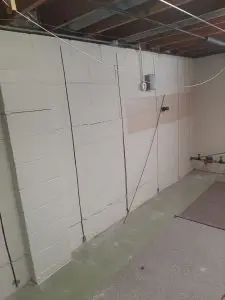
The primary culprit behind foundation distress in our region is the local soil. Toledo is built on heavy, expansive clay that behaves much like a sponge. During the heavy spring rains common in Northwest Ohio, this clay absorbs vast amounts of water and expands significantly. Conversely, during dry summer spells, the soil shrinks, creating gaps that allow for further movement. 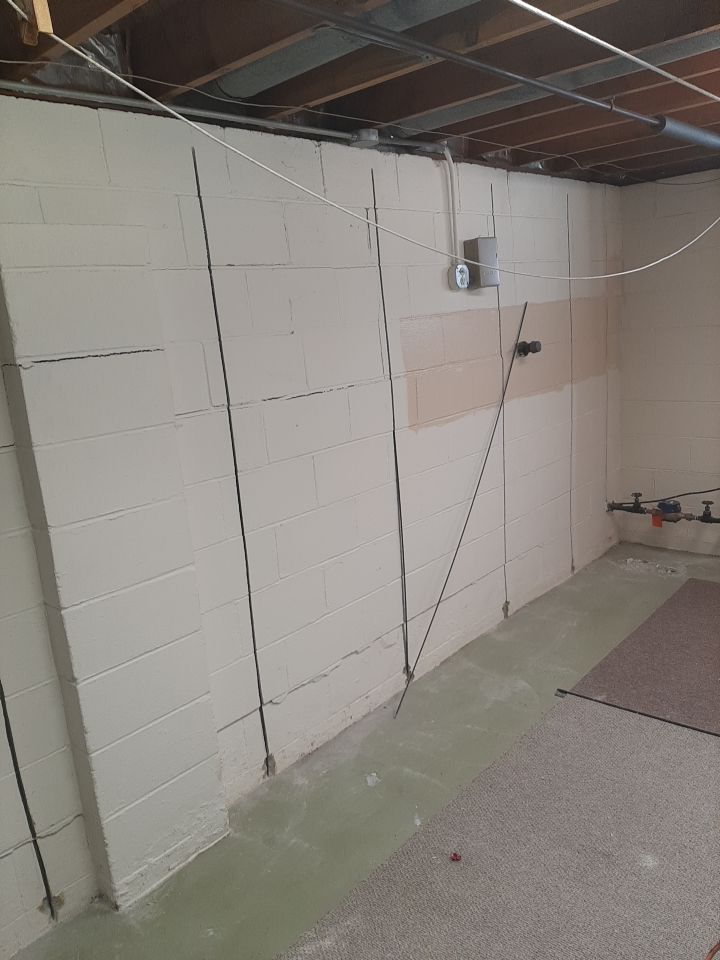
What is Hydrostatic Pressure?
As the clay soil around your home becomes saturated, it exerts what engineers call “hydrostatic pressure.” This is a relentless force pushing against your foundation walls. Because concrete is strong under vertical loads (the weight of your house) but weaker against lateral or “side” pressure, this force can eventually exceed the structural capacity of the wall, leading to the first signs of failure.The Role of Frost Heave
In addition to hydrostatic pressure, Toledo’s freeze-thaw cycles play a major role. When wet clay freezes, it expands even further, a process known as frost heave. This cyclical expansion and contraction puts immense stress on foundation blocks and poured concrete, often resulting in the dangerous horizontal fractures homeowners fear.Identifying the Emergency: Horizontal vs. Vertical Cracks
While many homes have “settlement cracks” that are vertical or diagonal and often harmless, horizontal cracks are a completely different category of structural failure. Understanding the difference is crucial for prioritizing your home’s safety.Horizontal Cracks: The Sign of Structural Failure
A horizontal crack running along a mortar joint or across a poured wall indicates that the wall is actually bowing inward. This “shearing” effect means the wall is no longer able to support the lateral pressure of the outside soil. If left unaddressed, this bowing can lead to a sudden and catastrophic wall collapse, especially during a heavy rain event where pressure peaks.Stair-Step Cracking in Brickwork
If you notice “stair-step” patterns in the mortar of your exterior brickwork or interior foundation blocks, your home is signaling that the foundation is shifting unevenly. While horizontal cracks show inward pressure, stair-step cracks often indicate that one corner of your home is sinking into the soft Toledo clay. Both require professional stabilization to prevent long-term damage.Engineering-Led Solutions for Permanent Stabilization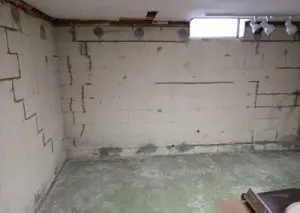
At Toledo Basement Repair, we don’t believe in “band-aid” fixes. Because every home is different, we utilize advanced engineering solutions tailored to your specific structural needs. 
Carbon Fiber Straps and Steel I-Beams
For walls that have begun to bow but are still structurally sound, we often use carbon fiber reinforcement. These straps are stronger than steel and are bonded directly to the wall to prevent further movement. In more severe cases of bowing, heavy-duty steel I-beams are installed to provide the necessary counter-pressure to stabilize the wall permanently.Helical Piers for Sinking Foundations
If your foundation is settling or sinking, helical piers are the gold standard. These large steel screws are driven deep into the earth, past the unstable “Toledo clay” and into load-bearing strata or bedrock. This transfers the weight of your home onto stable ground, often allowing us to lift the foundation back to its original position.The Cost of Delay: Repairing vs. Replacing
The most expensive mistake a homeowner can make is waiting. A horizontal crack caught early can often be stabilized with carbon fiber or beams for a fraction of the cost of a total wall replacement. Once a wall has reached its breaking point, the only solution is often total excavation and reconstruction, which can cost tens of thousands of dollars and disrupt your entire property.Frequently Asked Questions (FAQ)
Can a bowing wall be straightened without excavation?
In many cases, yes. Using a combination of wall anchors or specialized steel beams, we can stabilize and often pull a wall back toward its original position without destroying your landscaping. The sooner we intervene, the more likely a non-invasive solution will work.How long does a typical foundation repair take?
Most stabilization projects, such as installing carbon fiber straps or steel beams, are completed in just 1 to 3 days. Our goal is to provide a permanent, engineering-led solution with minimal disruption to your daily life.Will foundation cracks lower my home’s resale value?
Significantly. Most buyers cannot secure a mortgage on a home with documented structural defects. Repairing foundation issues now protects your equity and ensures a smooth sale when you are ready to move. We provide transferable warranties that offer peace of mind to future buyers.Take Action Today
Don’t wait for a hairline crack to become a structural failure. Protect your home’s structural integrity before the next heavy rain hits. Contact Toledo Basement Repair today at (419) 297-6138 for a free, expert-led structural inspection from our local engineering specialists. We are proud to serve Toledo, Perrysburg, Sylvania, and the surrounding Northwest Ohio and Southeast Michigan areas.
Kevin Oberhouse was raised in Toledo with 7 siblings. Dawn and Kevin have four kids.
The Oberhouse family lives in the house Kevin built when with his first crew. Kevin’s parents invited more than 100 foster children into their home throughout his life. Kevin believes this part of his life really helped to build empathy for others.
Kevin has a degree in civil engineering and went on to get an MBA as well as multiple other certifications in structural systems, egress systems, air quality, and commercial and residential roofing, among many others.
Toledo Basement Repairs promises to treat you and your project with respect and our best professional judgment. There is plenty of work out there and Toledo Basement Repair will not push you into a system that you do not fully understand or feel comfortable with.